Treating Dichloroethane and BTEX-contaminated soil and groundwater using Cryogenics, Italy
The Challenge
Geostream Group was tasked with treating complex hydrocarbon contamination onsite in Italy.
Soil and groundwater contamination present included, 1,2-Dichloroethane and BTEX (aromatic hydrocarbons).
In response, the team developed a novel method approach to treating the off gas from a multi-phase soil remediation plant.
Using cryogenics, off gas could be cooled, and contamination condensed out from the air stream into a liquid hydrocarbon.
Traditionally, high mass flow rates of hydrocarbon vapour are treated by oxidation using either thermal or catalytic oxidisers. Whilst effective at treating the gas, thermal oxidation produces large amounts of CO2, and often requires additional treatment to the vapour stream post oxidation (i.e. in the case of Chlorinated Hydrocarbons).
Our Solution
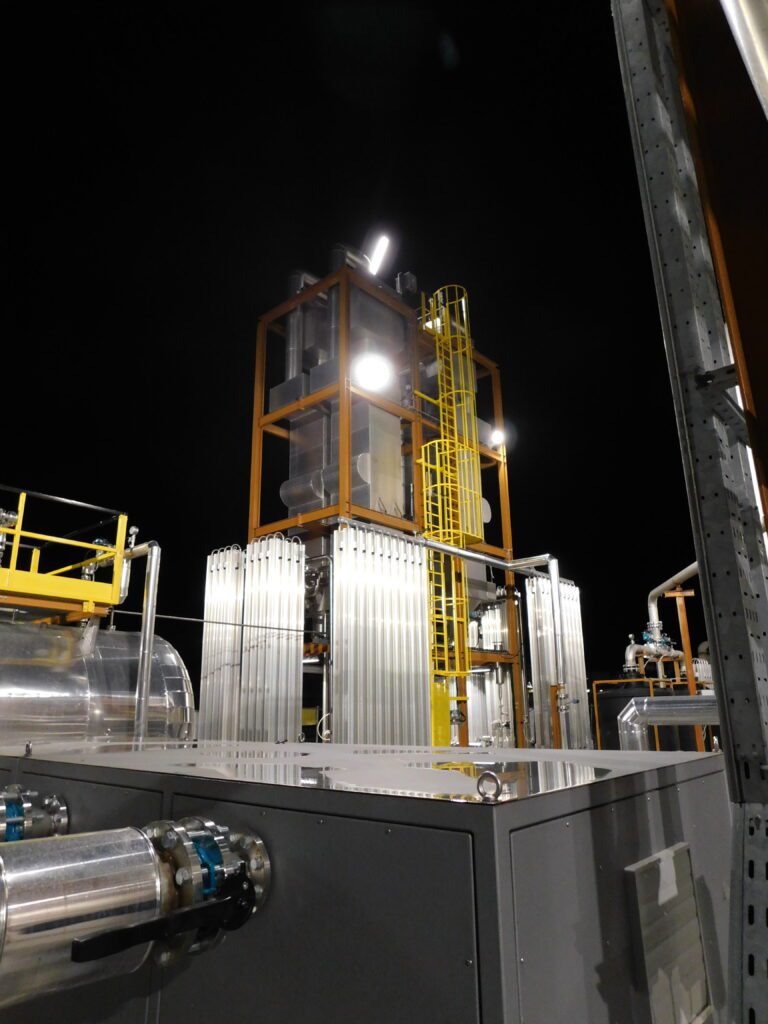
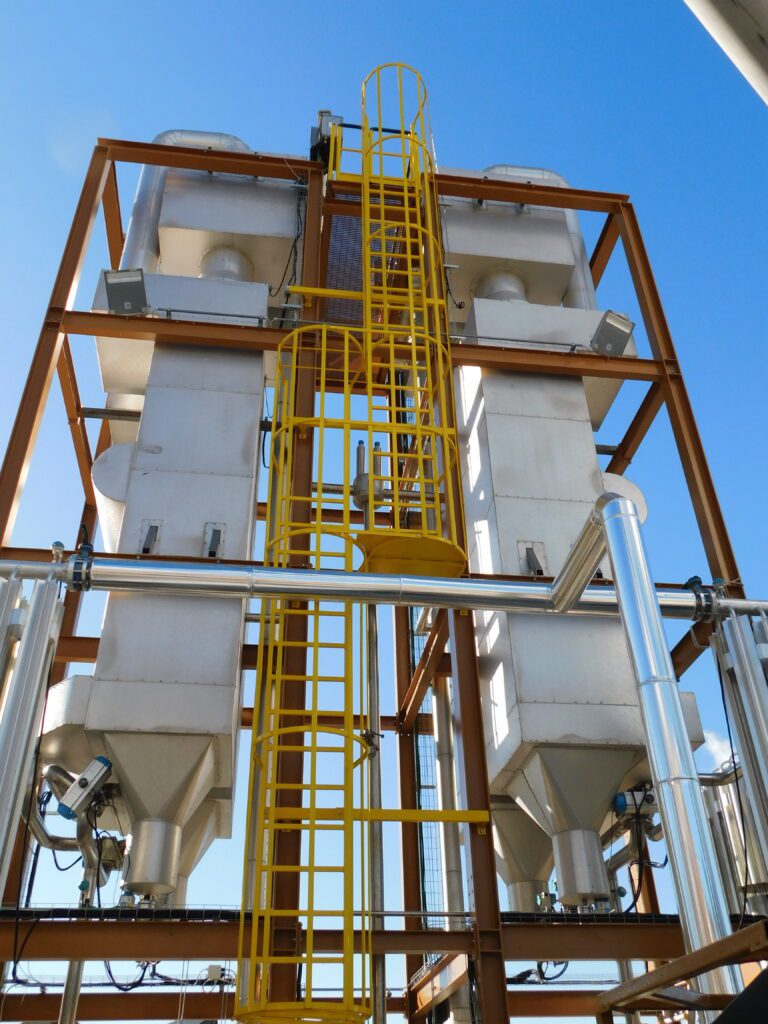
Geostream Group designed, built, operated, and maintained, a sophisticated cryogenic treatment plant, which operated as below:
Processed flow rate: 700 m3/h of GAS from 5 Multiple Phase Extraction systems remediation soil and groundwater (more than 100 wells in total) located over an extensive site area
Contamination mass: 1,2-Dichloroethane with concentrations of 50,000 mg/Nm3 and BTEX with concentration of 3,000 mg/Nm3.
Operating temperature: -140 °C achieved by cooling the gasses with Liquid Nitrogen in a heat exchanger at a pressure of 6 bar
Geometric dimensions: 12-metre-high towers in AISI316 steel material
The entire process was controlled by a series of instruments that monitor the plant in real-time.
This included real-time reporting on flow temperature and pressure and gas concentrations. The team were able to keep adjusting the flow rate of Liquid Nitrogen required to maintain the target operating temperature.
Our Results
>99% removal efficiency on treated pollutants
Lowered C02 emissions versus traditional methods
Increased treatment efficiency by removing requirement for additional treatment to the vapour stream post oxidation